Capability of Phanerochaete chrysosprorium Fungi and Pseudimonasis putida Bacteria for Removing Hydrocarbons
A Literature Review
Keywords:
bioremediation, hydrocarbon, Phanerochaete chrysosporium, Pseudomonas putidaAbstract
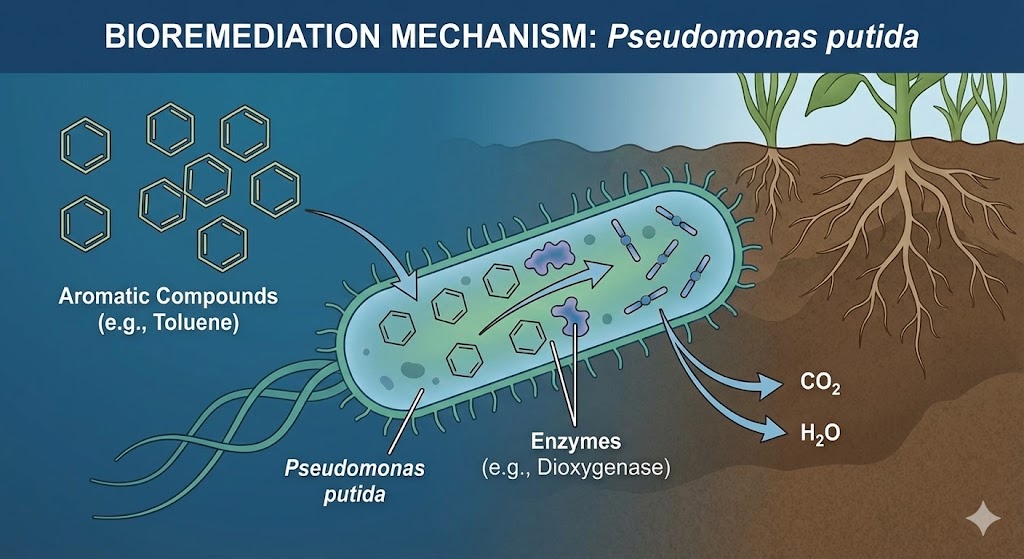
Soil contamination by hydrocarbons and hazardous chemical compounds is a serious issue for environmental sustainability. Bioremediation is an environmentally friendly approach that utilizes microorganisms to degrade pollutants. This article is a literature review focusing on two key microorganisms: the fungus Phanerochaete chrysosporium and the bacterium Pseudomonas putida. Both are known to have synergistic abilities to break down complex hydrocarbons through ligninolytic enzymes and aromatic metabolic pathways. Literature data demonstrates the successful application of both in the remediation of oil-contaminated soil, textile wastewater, and chemical industry applications. The results of this study confirm that the effectiveness of bioremediation is strongly influenced by environmental conditions, such as pH, temperature, oxygen, and nutrient ratios. This study is expected to provide a comprehensive overview of the potential, mechanisms, applications, and factors influencing the effectiveness of P. chrysosporium and P. putida.
Downloads
Published
Issue
Section
License
Copyright (c) 2025 Diah Ayu Prawitasari, Naila Syafa’atul Udzma, Dwina Putri Faizani, Fanny Salma, Rifqi Ilham, Syafa’atush Shidqina Muttaqin

This work is licensed under a Creative Commons Attribution-NonCommercial-ShareAlike 4.0 International License.