Reduction of Copper Metal (Cu) Content in Screen Printing Wastewater with Phytotreatment System
Keywords:
copper metal, costus spicatus, pacing pentul, phytotreatment, screen printing wastewaterAbstract
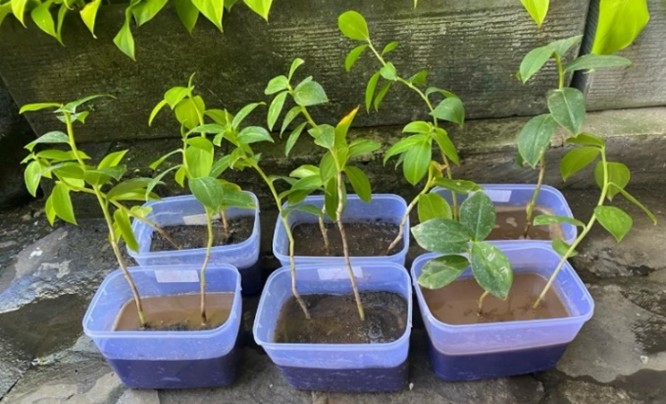
Bleaching is one of the activities in the convection industry that produces liquid waste and is disposed of directly into water bodies without any treatment. Based on the test results, the liquid waste of the convection industry in Denpasar contains a very high amount of copper metal (Cu), which is 396.3 mg/L. It is necessary to process the liquid waste so as not to cause pollution to water bodies. An alternative treatment that can be done is phytotreatment with an intermittent exposure system with a ratio of F/D (Flood/Dry) cycles of 1:2 and F/D 2:1. The plant used is Pacing Pentul (Costus spicatus) because it is a hyperaccumulator that is able to absorb heavy metals in high concentrations and accumulate in roots, stems, and leaves. The media used is gravel and sand. The research started from the propagation, acclimatization, Range Finding Test (RFT), and phytotreatment test. to determine the ability of Costus spicatus to absorb copper metal (Cu) in the F/D 1:2 and F/D 2:1 cycles in reducing copper metal (Cu) in liquid waste. The results showed that Pacing Pentul (Costus spicatus) was able to absorb copper metal (Cu) in liquid waste until it became 32.41 mg/L in the F/D 1:2 reactor and 33.67 mg/L in the F/D 2:1 reactor. The largest percentage of removal is owned by reactors with a 2:1 F/D exposure cycle that are able to reduce copper metal (Cu) by 91% within 18 days.
References
Damanik, M. O., & Purwanti, I. F. (2018). Range Finding Test (RFT) Cyperus rotundus L dan Scirpus grossus sebagai Penelitian Pendahuluan dalam Pengolahan Limbah Cair Tempe. Jurnal Teknik ITS, 7(1). https://doi.org/10.12962/j23373539.v7i1.28708
Djo, Y. H. W., Suastuti, D. A., Suprihatin, I. E., & Sulihingtyas, W. D. (2017). Fitoremediasi menggunakan Tanaman Eceng Gondok (Eichhornia crassipes) untuk Menurunkan COD dan Kandungan Cu dan Cr Limbah Cair Laboratorium Analitik Universitas Udayana. Cakra Kimia (Indonesian E-Journal of Applied Chemistry), 5(2), 137–144.
Evitasari, E., Bintan Sukono, G. A., Hikmawan, F. R., & Satriawan, D. (2020). Karakter Organisme Biologis dalam Bioremediasi - Review. Jurnal Pengendalian Pencemaran Lingkungan (JPPL), 2(2). https://doi.org/10.35970/jppl.v2i2.350
Femi-Olabisi, F. J., Ishola, A. A., Faokunla, O., Agboola, A. O., & Babalola, B. A. (2021). Evaluation of the inhibitory potentials of selected compounds from Costus spicatus (Jacq.) rhizome towards enzymes associated with insulin resistance in polycystic ovarian syndrome: an in silico study. Journal of Genetic Engineering and Biotechnology, 19(1). https://doi.org/10.1186/s43141-021-00276-2
Hartanti, P. I., Haji, A. T. S., & Wirosoedarmo, R. (2013). Pengaruh Kerapatan Tanaman Eceng Gondok (Eichornia Crassipes) terhadap Penurunan Logam Chromium pada Limbah Cair Penyamakan Kulit. Jurnal Sumberdaya Alam Dan Lingkungan, 31–37.
Irhamni, I., Pandia, S., Purba, E., & Hasan, W. (2017). Kajian Akumulator Beberapa Tumbuhan Air dalam Menyerap Logam Berat Secara Fitoremediasi. Jurnal Serambi Engineering, 1(2), 75–84.
ITRC. (2009). Phytotechnology Technical and Regulatory Guidance and Decision Trees, Revised. The Interstate Technology & Regulatory Council; Phytotechnologies Team.
Jabbar, A., Amalia, A. V., Haris, A., Dewi, N. R., Falasifah, F., & Abdullatif, M. (2024). Potensi Spirulina platensis sebagai Agen Remediasi Air Limbah Laundry. Jurnal Ilmu Lingkungan, 22(5(2024)), 1224–1231. https://doi.org/https://doi.org/10.14710/jil.22.5.1224-1231
Japar, A. S., Takriff, M. S., & Mohd Yasin, N. H. (2021). Microalgae acclimatization in industrial wastewater and its effect on growth and primary metabolite composition. Algal Research, 53. https://doi.org/10.1016/j.algal.2020.102163
Komarawidjaja, W. (2017). Paparan Limbah Cair Industri Mengandung Logam Berat pada Lahan Sawah di Desa Jelegong, Kecamatan Rancaekek, Kabupaten Bandung. Jurnal Teknologi Lingkungan, 18(2), 173. https://doi.org/10.29122/jtl.v18i2.2047
Marya Mistar, E. (2022). Efektivitas Tanaman Kangkung Air (Ipomoea aquatic forsk) Sebagai Media Penyerap Merkuri (Hg). PERISAI: Jurnal Pendidikan Dan Riset Ilmu Sains, 1(1). https://doi.org/10.32672/perisai.v1i1.65
Novita, E., & Pradana, H. A. (2022). Kajian Perbaikan Kualitas Air Limbah Pengolahan Kopi Menggunakan Metode Fitoremediasi dengan Tanaman Eceng Gondok (Eichhornia crassipes). JST (Jurnal Sains Dan Teknologi), 11(1). https://doi.org/10.23887/jstundiksha. av11i1.45298
Patandungan, A., HS, S., & Aisyah, A. (2016). Fitoremediasi Tanaman Akar Wangi (Vetiver zizanioides) terhadap Tanah Tercemar Logam Kadmium (Cd) pada Lahan TPA Tamangapa Antang Makassar. Al-Kimia, 4(2), 8–21. https://doi.org/10.24252/al-kimia.v4i2.1676
Picanço, L. C. dos S., Bittencourt, J. A. H. M., Henriques, S. V. C., da Silva, J. S., Oliveira, J. M. da S., Ribeiro, J. R., Sanjay, A. B., Carvalho, J. C. T., Stien, D., & Silva, J. O. da. (2016). Pharmacological activity of Costus spicatus in experimental Bothrops atrox envenomation. Pharmaceutical Biology, 54(10). https://doi.org/10.3109/13880209.2016.1145703
Putri, W. (2023). Kemampuan Eceng Gondok (Eichhornia Crassipes) sebagai Fitoremediasi dalam Pengolahan Limbah Cair Industri Tempe. Doctoral Disertation, 938, 6–37.
Rahawarin, S. (2011). Potensi Kitin Kepiting Bakau (Scylla olivacea Herbst) dalam Menyerap Logam Berat Tembaga (Cu) dari Limbah Tailing Industri Pertambangan di Timika, Papua. 1–23.
Safaruddin, M. D., Wijayanti, F., & Oktasari, A. (2022). Analisis Kadar Logam Kromium (Cr) pada Limbah Penyablonan di Konveksi Sakinah Palembang. Prosiding Seminar Nasional Sains Dan Teknologi Terapan, 5, 376–380.
Selpiani, L., Umroh, & Rosalina, D. (2015). Konsentrasi Logam Berat (Pb, Cu) pada Kerang Darah (Anadara Granosa) di Kawasan Pantai Keranji Bangka Tengah dan Pantai Teluk Kelabat Bangka Barat. Oseatek, 9(01), 21–34.
Sotelo, T. J., Sioen, G. B., & Satoh, H. (2021). Circling the drain: A systems analysis of opportunities for enhanced sewer self-purification technologies in wastewater management. In Journal of Environmental Management (Vol. 288). https://doi.org/10.1016/j.jenvman. 2021.112451
Sukono, G. A. B., Hikmawan, F. R., Evitasari, E., & Satriawan, D. (2020). Mekanisme Fitoremediasi: Review. Jurnal Pengendalian Pencemaran Lingkungan (JPPL), 2(2). https://doi.org/10.35970/jppl.v2i2.360
Tangahu, B. V., Winata, A. Y., & Arliyani, I. (2022). Range finding test and measurement of wet weight and dry weight of Vetiveria zizanioides (L.) Nash as an initial stage of phytoremediation of soil contaminated with used lubricants. Plant Science Today, 9(2). https://doi.org/10.14719/pst.1442
Titah, H. S., Tangahu, B. V., & Sarwoko, M. (2018). Teknologi Remediasi Lingkungan. Mobius.
Vidyanti, R. A., R., & Rokhmalia, F. (2020). Fitoremediasi Tanaman Kangkung Air (Ipomoea aquatica) Dalam Menurunkan Kadar Timbal (Pb) Pada Air Sumur. GEMA LINGKUNGAN KESEHATAN, 18(1). https://doi.org/10.36568/kesling.v18i1.1084
Violita, L., Apriani, I., & Sulastri, A. (2022). Kemampuan Tanaman Kangkung Air Dalam Menurunkan Krom Heksavalen (Cr6+) Pada Limbah Cair Sablon. Jurnal Rekayasa Lingkungan Tropis, 3(1), 37–44.
Yusuf, G. (2008). Kemampuan Tanaman Air Pada Proses Bioremediasi. Jurnal Bumi Lestari, 8(2).
Downloads
Published
Issue
Section
License
Copyright (c) 2025 Ida Ayu Rai Widhiawati, Putu Primantari Vikana Suari , Ida Bagus Made Baskara Andika, I Gede Andy Andika Parahita, Made Cahyadewi Saka Putri

This work is licensed under a Creative Commons Attribution-NonCommercial-ShareAlike 4.0 International License.